
Seafood Myths: Mercury, Fresh vs. Frozen, and Farmed vs. Wild Caught
Seafood Myths: Mercury, Fresh vs. Frozen, and Farmed vs. Wild Caught
In Part 1 of this National Seafood Month series, I explained what counts as seafood — from fish and shrimp to clams, scallops, and even squid. Now that we know seafood is more than just fish, it’s time to address some of the biggest myths that can make people nervous about eating it.
Seafood is one of the most nutritious foods you can eat. Yet, I often hear people say they avoid it because of fears about mercury, concerns that frozen fish isn’t as nutritious as fresh, or worries about farmed fish being “bad” and injected with all kinds of things. So here I address these myths and get to the real story. Here we go.
Myth #1: All Seafood is Loaded with Mercury
Mercury is a genuine concern in our food supply, but the truth is that most seafood contains very low levels of it. The fish that tend to accumulate higher amounts of mercury are larger, longer-living predators like shark, swordfish, king mackerel, and tilefish. These aren’t the kinds of fish most people eat regularly.
The most common choices, such as salmon, shrimp, canned light tuna, tilapia, cod, and sardines, are all considered low in mercury and safe for regular consumption. The FDA and EPA even provide clear guidelines, especially during pregnancy and in young children, encouraging them to eat 2–3 servings of low-mercury seafood per week.
In fact, avoiding seafood altogether due to mercury concerns means missing out on essential nutrients, such as protein, vitamin D, selenium, and omega-3 fatty acids. The benefits of eating seafood regularly far outweigh the risks for most people. This is one of those situations in which the fear or myths contribute to low or no intake, which is often more harmful than the risk of mercury exposure.
Myth #2: Fresh is Always Better than Frozen
Walk through a grocery store, and you’ll notice that seafood labeled as “fresh” tends to cost more than frozen – especially for those of us who are hundreds or even thousands of miles away from the ocean, rivers, or lakes where fresh fish is readily accessible. Many people assume that “fresh” means higher quality, but that’s not always the case.
Here’s the reality: most fish labeled “fresh” at the counter were previously frozen at sea to preserve quality, then thawed before being displayed – look closer and you will see it labeled as such. That means if you buy it and freeze it again at home, you’re really refreezing fish that was already frozen.
Frozen fish, on the other hand, is usually frozen quickly right after being caught. This locks in nutrients, flavor, and texture. Buying frozen fish also reduces waste, as you can use it when needed, rather than rushing to cook it within a day or two.
So no — fresh isn’t always better. Frozen seafood is often just as nutritious, and sometimes even fresher than what’s sitting behind the counter.
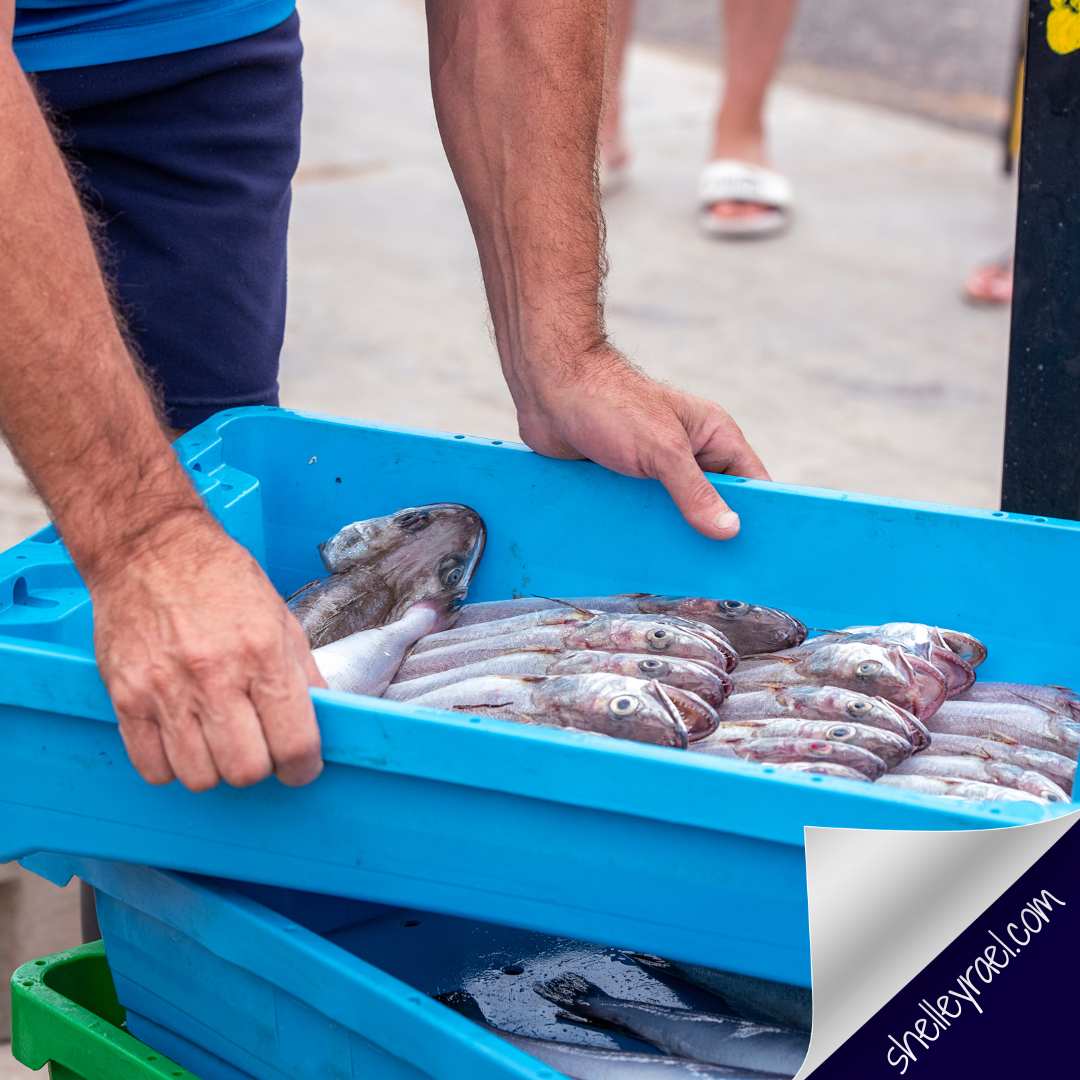
Myth #3: Farmed Fish is Bad for You
Farmed seafood has a mixed reputation, but not all fish farms are the same. Like any food production system, there are both good and not-so-good practices.
Today, farmed fish account for approximately half of the seafood consumed worldwide. It’s one of the main ways we can meet demand without overfishing oceans. Many farms now follow strict regulations that prioritize water quality, feed quality, and environmental sustainability.
Nutritionally, farmed fish is very similar to wild-caught. For example, farmed salmon often has more omega-3 fatty acids than wild salmon because of what it’s fed. The downside is that farmed fish can sometimes be higher in fat overall, but it’s still a nutrient-dense food.
Rather than avoiding farmed seafood altogether, the better approach is to look for certifications such as Best Aquaculture Practices (BAP) or the Aquaculture Stewardship Council (ASC), which ensure responsible farming methods.
Key Takeaways
Seafood can be confusing, especially with so much conflicting information. The key takeaways are:
Mercury is a concern only in certain fish. Most seafood is safe and encouraged, even during pregnancy, and especially for young children.
Frozen fish is just as nutritious as fresh — and often more convenient.
Farmed seafood isn’t automatically “bad.” In fact, it’s an integral part of feeding the world sustainably.
If you’ve been avoiding seafood because of these myths, you may be missing out on a delicious, nutrient-rich food that supports heart and brain health.
Next Up in the Series
This is Part 2 of my National Seafood Month series. Next time, we’ll wrap up with a look at seafood and sustainability, including what you need to know about making eco-friendly choices at the store.